

Retekess TR113 Portable Radio Flagship Fever Receiver Full Band Ham Radio Amateur Shortwave Antenna Bluetooth Radios VHF UHF SSB


Retekess TR113 Portable Radio Flagship Fever Receiver Full Band Ham Radio Amateur Shortwave Antenna Bluetooth Radios VHF UHF SSB

Notes:
1. The latest version currently on sale is 1.710
2. The first batch of products purchased before is version 1.689, which cannot be upgraded to the latest version by yourself. If you want to upgrade, you need to send it back for debugging.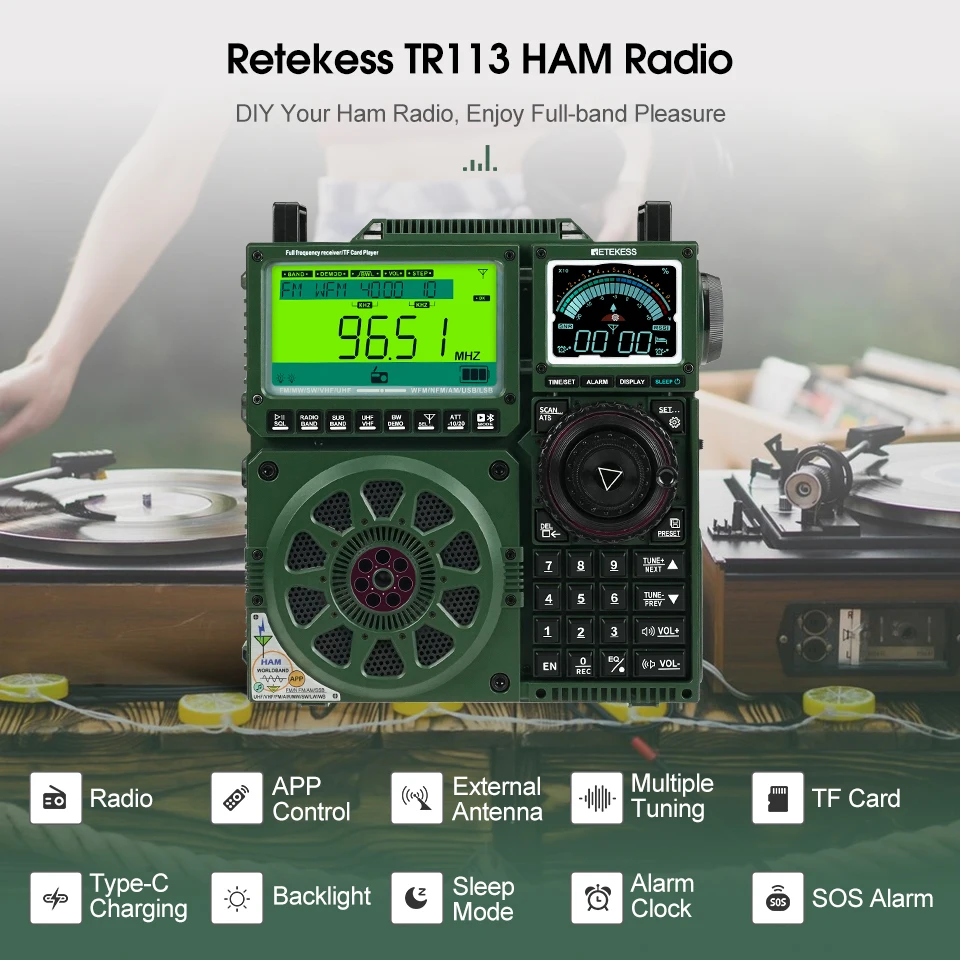
 FM /AM Band: When hiking, camping, or climbing in remote areas or mountainous areas, mobile phone signals may be unstable. FM radio, with its portability and no need for a network, can receive weather forecasts, emergency notifications, or music programs.
MW Band: Medium wave signal coverage is usually tens to hundreds of kilometers (depending on the transmission power and terrain), suitable for receiving local radio programs, especially in rural or remote areas, where medium wave is the main broadcasting method.
LW Band: Radio enthusiasts and collectors/those seeking emergency communications. Due to its technical characteristics and historical background, the LW Band holds particular appeal for radio enthusiasts. They may be interested in exploring long-distance signals and listening to historical long-wave stations. Long-wave signals have strong penetrating power and long ground wave propagation distances (up to hundreds of kilometers), potentially providing reliable emergency communications or broadcasting services when natural disasters (such as earthquakes and floods) disrupt other communications.
SW Band :radios are suitable for those who need to communicate across regions, obtain emergency information, listen to international content, or explore radio, especially in outdoor environments without network coverage, during disasters, or during international travel. Their core advantages lie in long-range coverage and disaster resilience, but choosing the right device based on actual needs and usage scenarios requires mastering basic operating techniques.
VHF/UHF Bands: These radios are suitable for those who need short- to medium-range communications, emergency information, outdoor activities, or professional research. They offer advantages such as strong interference resistance and coverage of specific critical frequency bands (such as weather alerts). However, considerations should be given to legality and device compatibility.
CB Band: Many amateur radio enthusiasts use CB as an entry-level radio device for learning communications skills or casual conversation. CB can be used as a backup communication tool during activities such as hiking, camping, and mountaineering (especially in remote areas with limited mobile phone coverage). In rally racing, off-road racing, and car tuning events, CB is used for real-time communication between drivers or between teams and command centers.
WB Band: The application population covers a wide range of groups from professional technicians (such as engineers and researchers) to ordinary users. Its core advantages lie in higher bandwidth, lower latency, and clearer signal quality. It is suitable for scenarios requiring high data transmission rate, high resolution or high fidelity.
AIR Band: Used by a wide range of users, from pilots to researchers, and applied in key areas such as aviation safety, drone technology, satellite communications, and emergency response. The choice of specific frequency band depends on transmission distance, data rate, interference environment, and regulatory restrictions.
 1.Full and reception
You can listen to radio on a variety of bands to suit your specific interests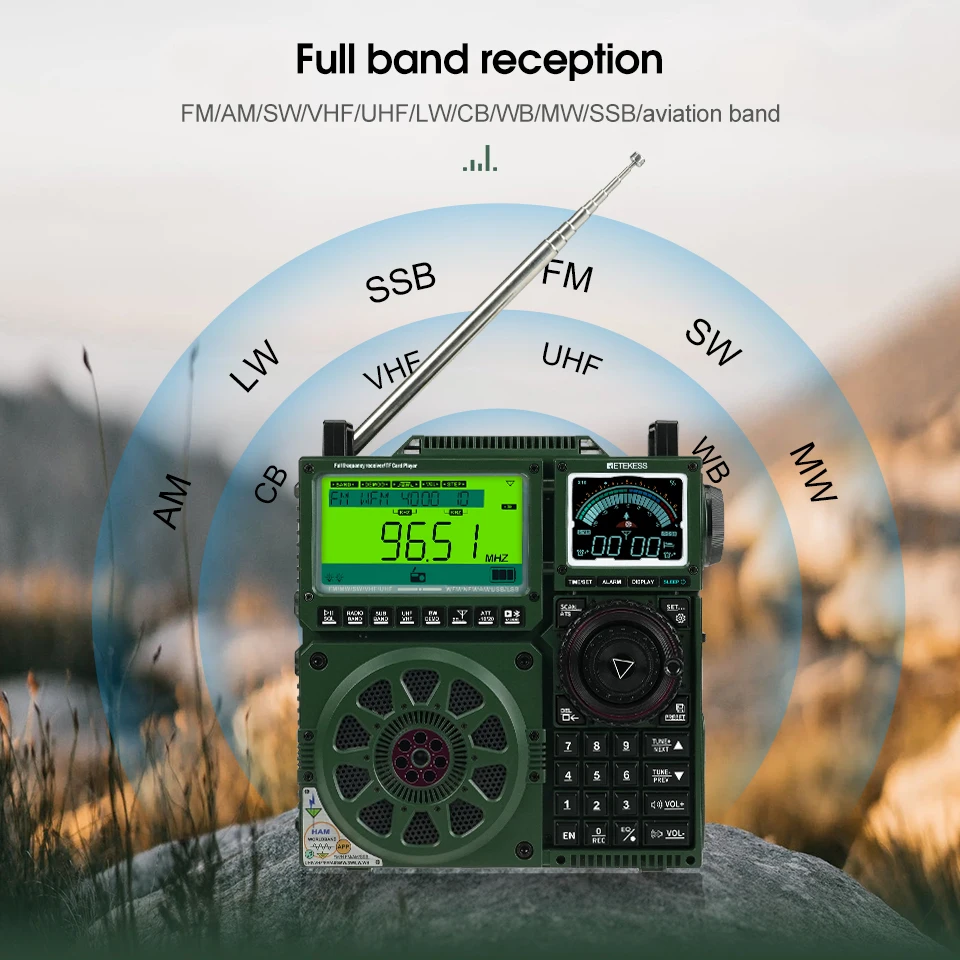 2.Support aviation band
The aviation band can receive aircraft communication frequencies, which is a valuable way to understand aviation operations and real-time conditions. 3.Multiple antenna modes
An external antenna can expand the radio’s frequency coverage and broaden your listening options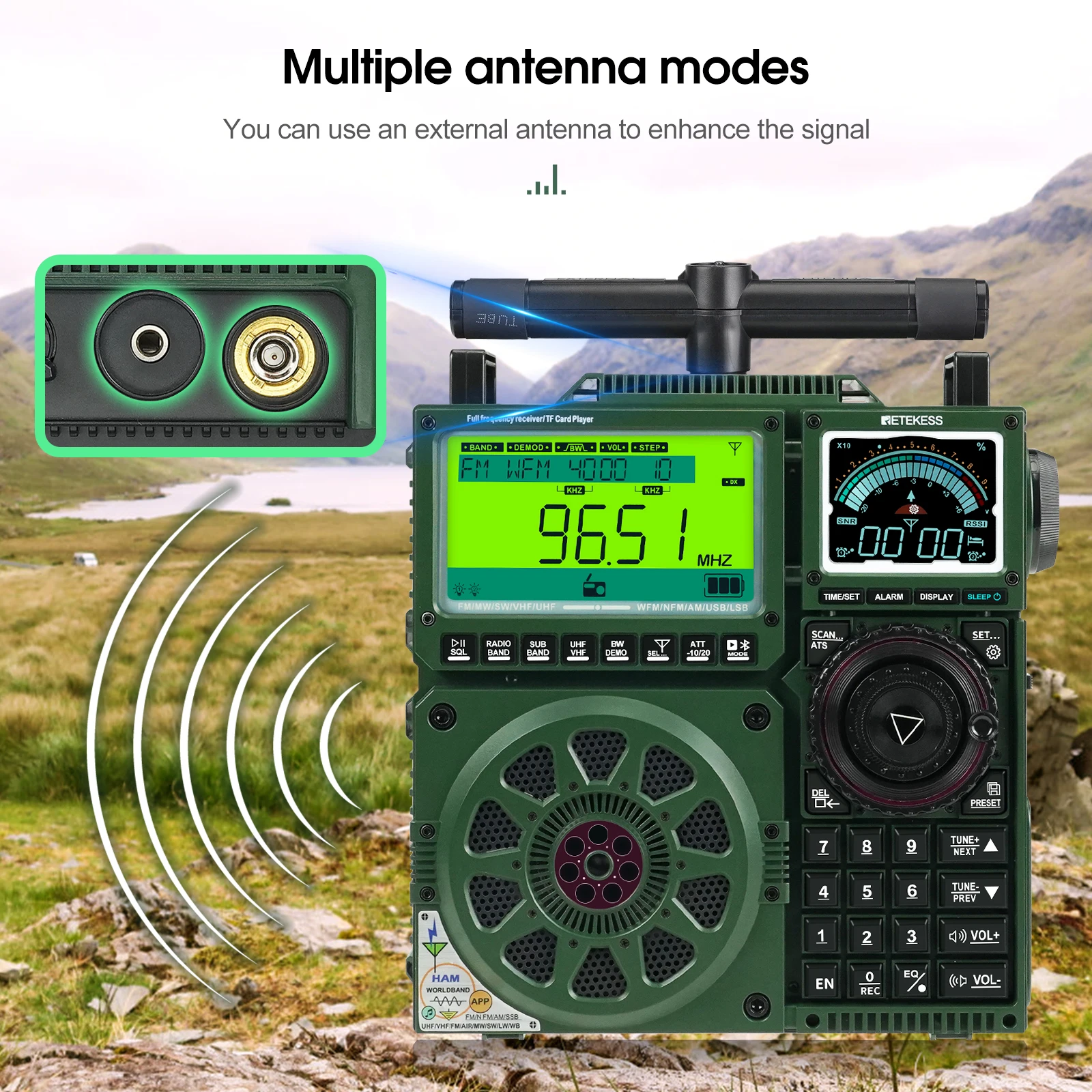 4.Intelligent control
You can use the app remote control to conveniently listen to your favorite channel, adjust volume, control playback and so on 5.Various tuning methods
Supports digital tuning, manual tuning, pulley tuning, and multiple tuning methods, providing you with more fun to use 6.Dual display screen
The main screen will display the band, frequency, volume information.
The secondary screen displays information such as sleep shutdown, alarm clock timing, signal-to-noise ratio, etc. 7.Large memory capacity
1600 memories for easy access to frequently listened stations 8.Dual-use TPYE-C jack
Type-C Jack has two uses: 1. Charging 2. An external speaker connector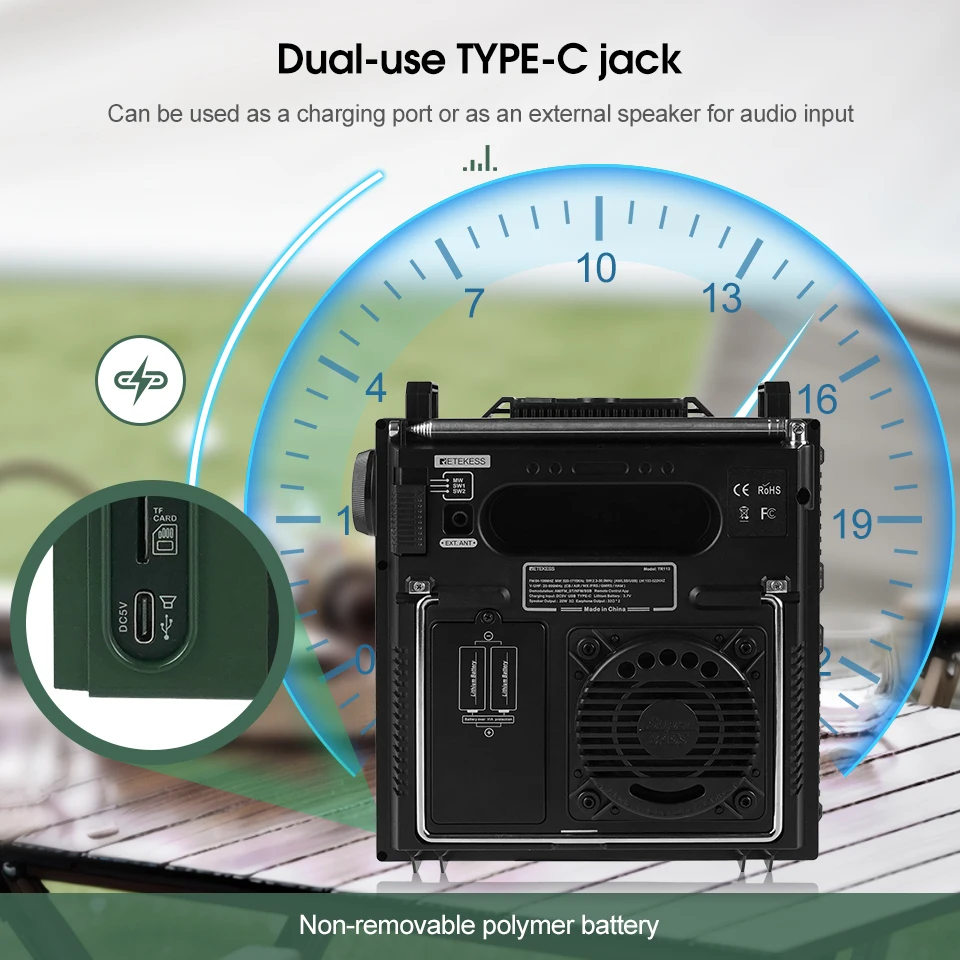 9.Radio interfaces
There is an audio input port, a headphone jack, a TF card slot, and a charging port on the side of the radio. 10.Dual stereo speakers
It delivers clear sound(Ф100mm/4Ω/20W), making sure your favorite broadcast sound better than ever before. 11.Backlight display
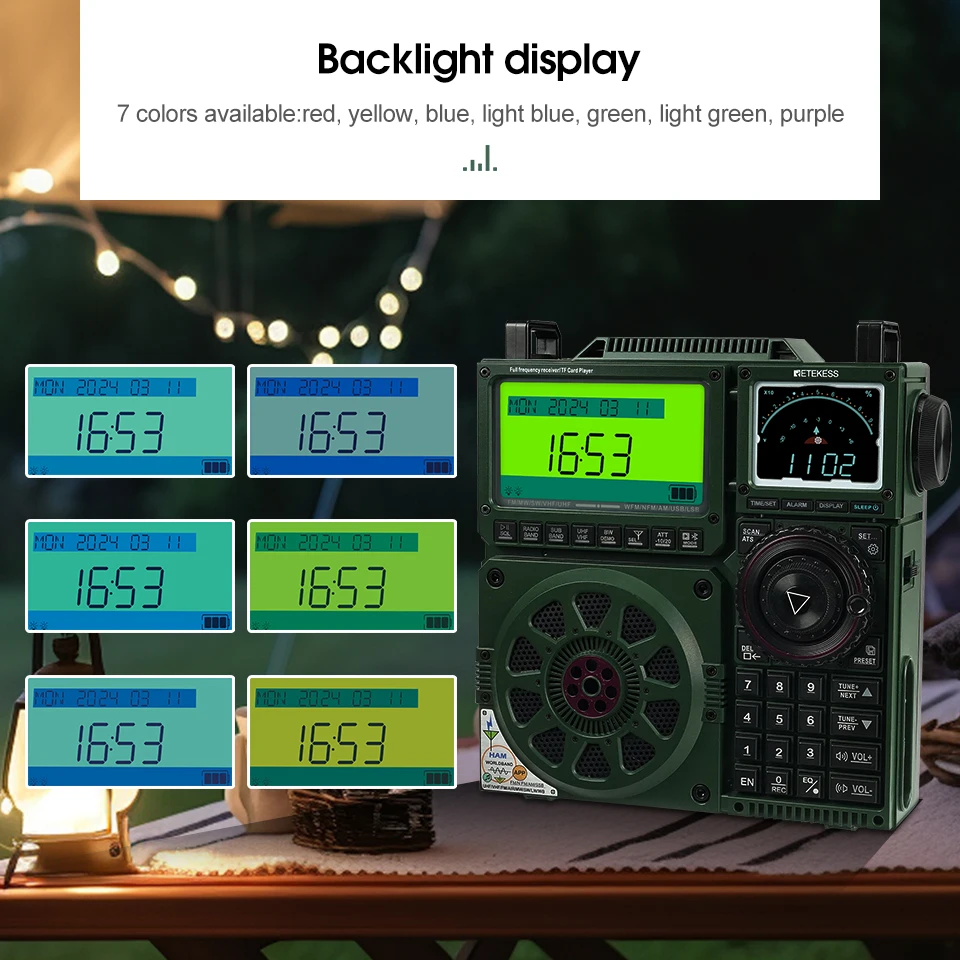 12. Easy to carry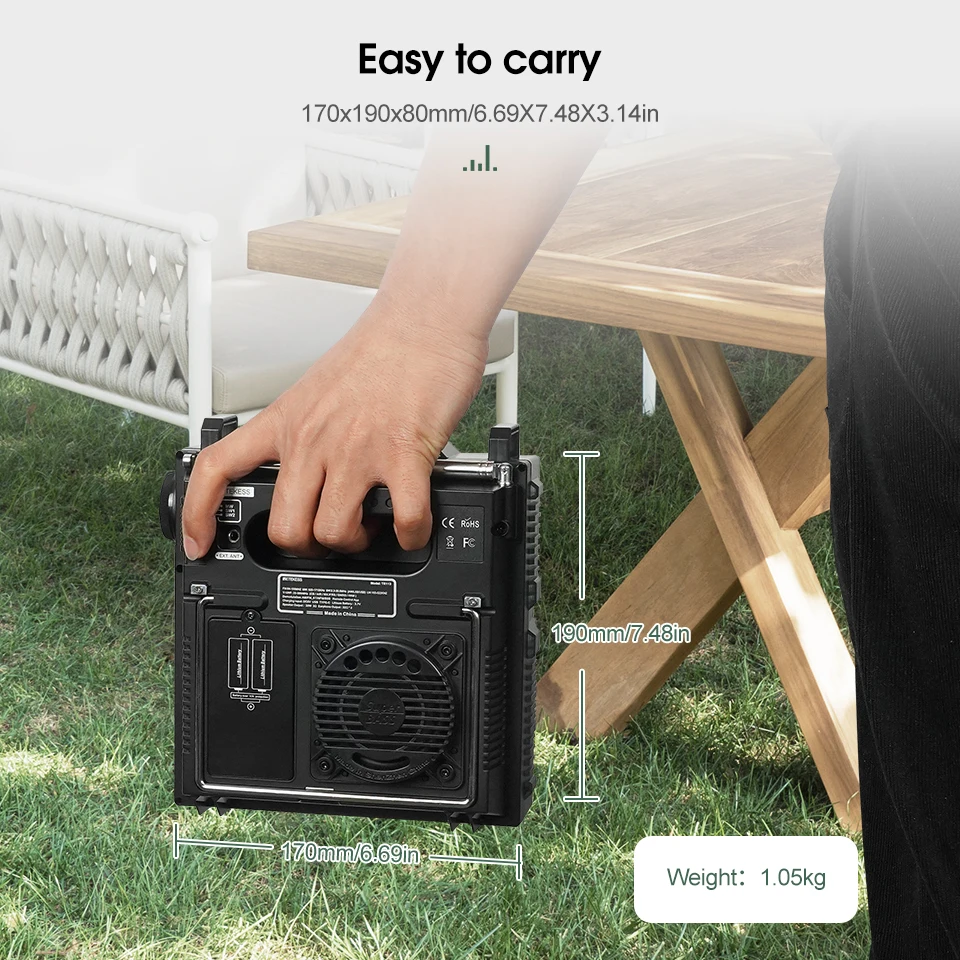


 1.What is the size of it?
The dimensions of it are 250 x 105 x 215mm.
2.What audio formats and memory sizes does the TF card support?
TF card supports up to 256G
---TF card supports MP3, WMA, WAV, APE, FLAC, format song playback
---Maximum number of files supported by TF card: 65535
3.Is there SDR function?
Without this function, the software only implements remote control